Did You Know?
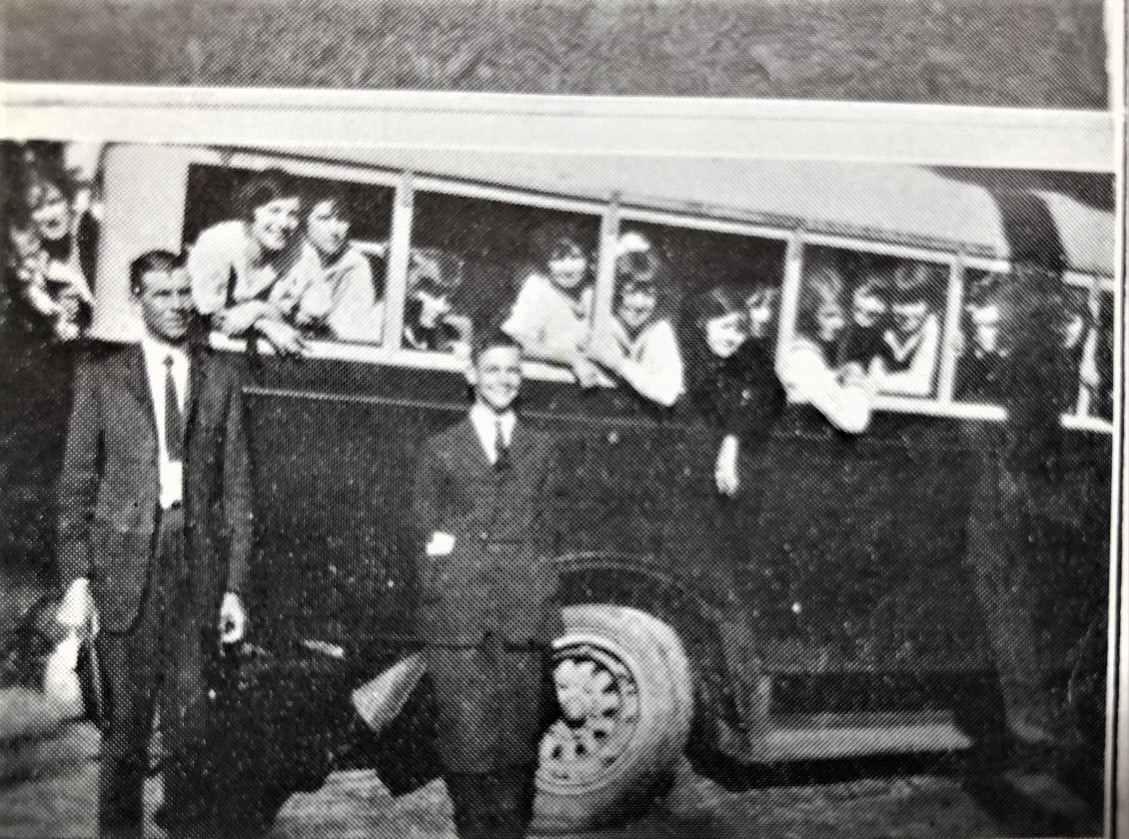
The Beginning of Camp Montreat for Girls
Camp Montreat for Girls first opened in 1924. Montreat already had a summer club program of sorts, with the Boys’ Club and Girls’ Club. However, these programs served only children of families who were staying in Montreat. Dr. Robert Anderson, then President of MRA, and many of the board members concluded that the benefits of spending at least part of the summer in Montreat should be available to more young people. The objective, according to an early brochure, was “to show that young people can be entertained without the questionable forms found in so many places.” Thus was born the idea for a residential camp program. It was situated on 28 acres that had once belonged to John Huyler, a New York philanthropist and major benefactor of Montreat. Anderson and W. H. Belk together had purchased the property and gave it to Montreat. The lodge on the property, Andelk, became the nucleus of the camp. With the addition of an annex, the camp had an assembly room, a dining hall, and sleeping quarters. Twenty-six girls came that first year, at a cost of $200 each plus a surcharge if they chose to participate in horseback riding. Activities included a daily Bible Hour, sports, crafts, and the opportunity to take academic classes with Montreat Normal School. Stay tuned for the next issue in this mini-series on Camp Montreat!
Camp Montreat – Full Summers, Busy Days
Camp Montreat grew steadily from its beginning in 1924 with twenty-six campers to host 80-100 campers during the summers. Girls could come for a four-week session but many stayed all summer, which encompassed two, four-week sessions. Increasingly experienced leadership brought more mature programming. Camp continued throughout the World War II years and prospered even with the departure of long-time director Alice McBride in 1949. Popular outdoor activities included hiking, swimming (all campers were required to learn to swim), canoeing, and horseback riding. Every year campers entered, and often won, local horse riding competitions. Basketball, crafts, and archery also filled many days. Campers were divided into teams for the entire session and healthy competition culminated in a special awards banquet at the end of each summer. Each day started and ended with vesper services. Throughout its evolution, the camp philosophy always encompassed personal and spiritual growth. Today, women who attended Camp Montreat reflect on what they describe as an amazing opportunity. The final installment in this series will examine the end of Camp Montreat.
Camp Montreat Closes – 1967
Despite almost always operating at full capacity, Camp Montreat experienced considerable financial difficulties throughout its operation. By 1960 the break-even point was sixty-five campers. The additional campers did not provide much of a financial cushion to attend to the infrastructure and MRA had no significant funds to invest in the camp. Each year the camp director reported problems that ranged from broken refrigeration in the kitchen to bathrooms not up to state standards to rotting floor boards and unsafe porches. In 1964 Dr. C. Grier Davis, President of MRA, appointed a committee to examine the feasibility of continuing Camp Montreat. That committee concluded that while the camp had always provided a fine program with very capable leadership, financing to bring the aging infrastructure up to a par with similar camps was not available. Moreover, the property was actually part of Montreat College, then embarking on significant expansion. The land on which Camp Montreat was situated would be an ideal location for a new athletic field, concluded the landscape architect. Dr. Davis accepted the recommendation of the committee that the camp be closed. Campers who had planned to return for the 1967 season were disheartened. Camp Merri Mac on Montreat Road, rescued from near-extinction in 1949 by Alice McBride, the long-time director of Camp Montreat, reached out to them and many girls thus returned to these mountains and found a camp not unlike Camp Montreat.
Thanks to the Presbyterian Heritage Center, especially Nancy Midgette, for this glimpse from the past. Stop by the PHC for even more Montreat history and so much more.