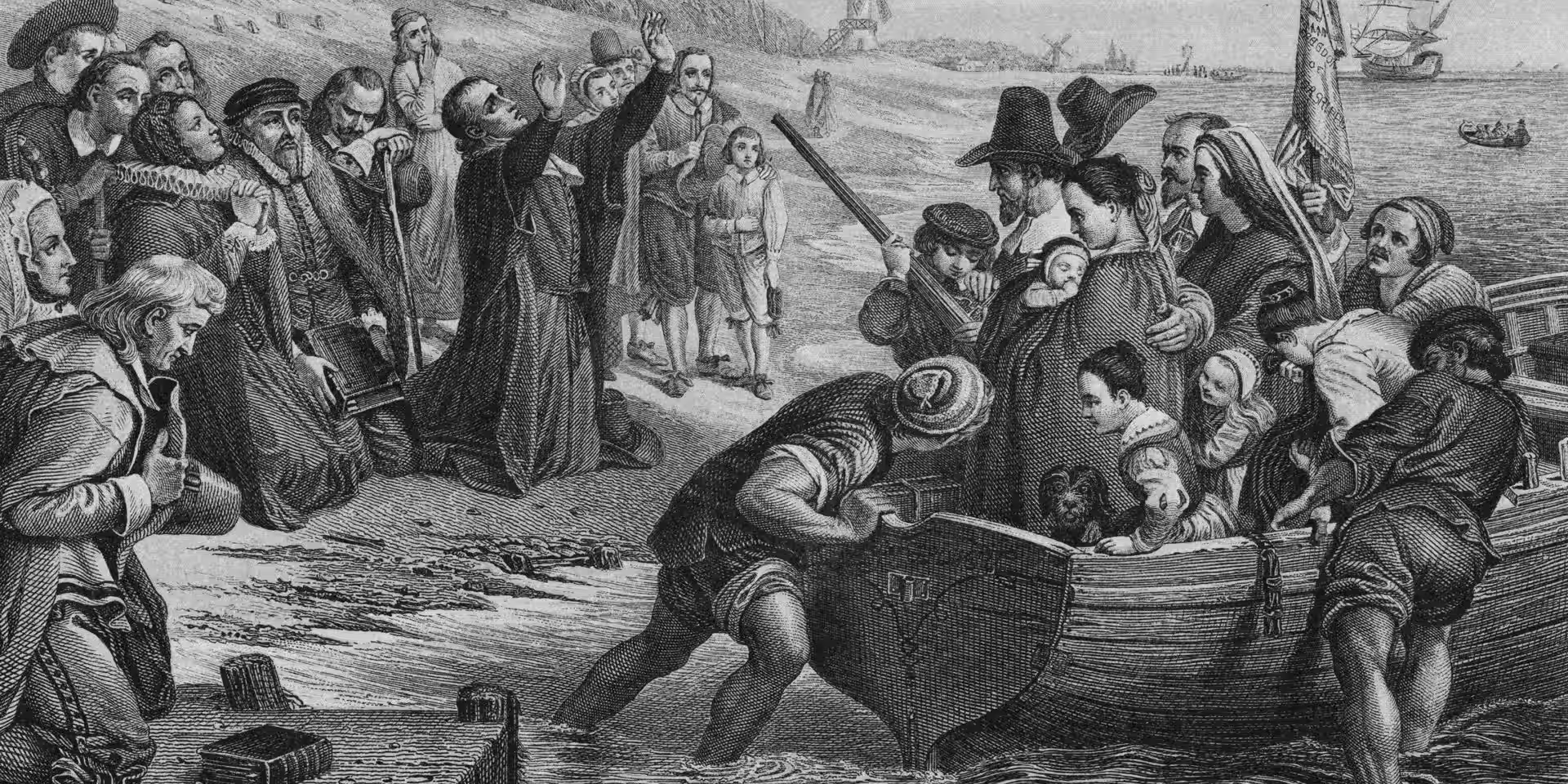
When the Mayflower crossed the Atlantic in 1620, it carried more than families seeking a new life—it carried a theological tradition deeply rooted in the Reformed faith. The Pilgrims, often remembered simply as early settlers or religious refugees, were in fact products of a rich and complex movement within Protestantism, shaped by Calvinist theology, English Puritanism, and a radical commitment to worship according to Scripture alone.
The Pilgrims emerged from the broader Puritan movement that took shape during the English Reformation. Though England under Henry VIII had broken from Rome, many Reformers believed the Church of England still retained too many Catholic structures and ceremonies. Puritans sought to “purify” the church according to biblical standards, emphasizing scripture as the supreme authority, simple, word-centered worship and a disciplined, morally earnest Christian life.
Within this Puritan world, two distinct paths emerged: non-separating Puritans, who aimed to reform the Church of England from within, and Separatists, who concluded that the national church was beyond reform. The Pilgrims belonged firmly to the latter category.
The Pilgrims’ theology was unmistakably Calvinist—rooted in the teachings of John Calvin and the continental Reformed tradition. This influence shaped nearly every aspect of their religious identity:
- The Sovereignty of God
They believed in God’s absolute authority over salvation, history, and daily life. Providence was not an abstract doctrine but a lived reality; they interpreted trials, deliverance, and even the success of their voyage through this lens.
- Covenant Theology
The idea that God relates to His people through covenants shaped both church and society. The Pilgrims saw themselves as a covenanted community—bound to God and to one another for His glory. This concept laid a foundation for early colonial self-government, most famously expressed in the Mayflower Compact, a civil covenant grounded in mutual accountability and moral purpose.
- The Regulative Principle of Worship
The Pilgrims adhered to the Reformed belief that worship must be ordered strictly according to Scripture. Their services were characterized by expository preaching, congregational prayer, psalm singing, and simplicity—rejecting liturgical forms they associated with the Catholic past.
Before journeying to America, the Pilgrims spent more than a decade in the Netherlands, especially in Leiden—a center of Reformed scholarship. There they encountered continental Calvinist thought, lived in proximity to Dutch Reformed congregations, and enjoyed a tolerance that allowed their church to flourish.
This Dutch period deepened their Reformed identity in several ways. It exposed the Pilgrims to European Reformed practices. Their isolation in Holland created an emphasis on the importance and need for self-governing congregations. Theologically, the Synod of Dort held in Holland in 1618 and 1619, which involved representatives from eight foreign Reformed churches, brought great discussion and focus on important Calvinist doctrines. The Pilgrims did not lose their English Puritan character, but the Leiden years enriched and strengthened their Reformed commitments.
In Plymouth Colony, the Pilgrims established a church structured around elders and deacons, independent congregation under Christ’s authority and covenant membership requiring profession of faith and moral integrity. Their brand of Congregationalism—Reformed in doctrine, independent in governance—became influential throughout New England and deeply shaped later American religious traditions.
The Pilgrims’ Reformed faith was not peripheral – it was at the core of their identity and the driving force behind their migration. Their commitment to Scripture, covenant community, and a pure form of worship left a lasting imprint on American religious and civic life.
Though often overshadowed by the Puritans who arrived later in larger numbers, the Pilgrims laid an early cornerstone of Reformed Protestant influence in North America. Their voyage was not only a search for freedom, but the continuation of a theological journey that began in England, matured in the Netherlands, and took lasting root in the New World.
Learn More: Why did the Pilgrims Come to America?